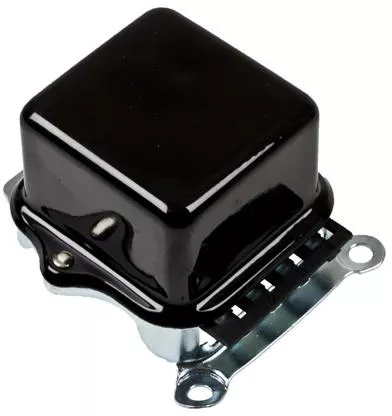
When your alternator isn’t keeping your battery charged properly or your lights are dimming during operation, there’s a good chance your voltage regulator has called it quits. This external 4-terminal voltage regulator is specifically designed for older Delco alternator systems and controls the charging output to keep your battery happy and your electrical system running strong. It’s the little box that makes sure you’ve got reliable power for starting, lights, and all your electrical accessories.
What You’re Getting
- 12-volt system regulation that maintains proper charging voltage regardless of engine RPM
- 4-terminal design with clearly marked F-Field, 2-Stator, 3-B+, and 4-Light connections
- External mounting allows for easy replacement without alternator removal
- Solid-state construction that’s more reliable than the old mechanical regulators
- Weather-resistant housing built to handle the punishment of farm work
Built for Real Farm Work
This regulator works with a huge variety of tractors from Massey Ferguson, International, Allis Chalmers, Oliver, Minneapolis Moline, and more – basically any machine that came equipped with older Delco alternator systems. Whether you’re running a classic MF 165 through hay season, using an International 806 for fieldwork, or keeping an old Oliver alive for daily chores, this regulator ensures your charging system works like it should.
Made to Last
The solid-state electronics inside this regulator are far more dependable than the old points-and-coil regulators they replaced. It handles voltage spikes, temperature swings, and the constant vibration of tractor operation without missing a beat. The compact housing mounts easily and stays protected from weather and debris.
Good to Know
Make sure your electrical system is 12-volt negative ground before installing – most tractors from this era are, but it’s worth double-checking. Always disconnect your battery before working on electrical components. The terminal markings are clearly labeled, but if you’re unsure about the wiring, grab a simple multimeter or have your local shop verify the connections before powering up.